

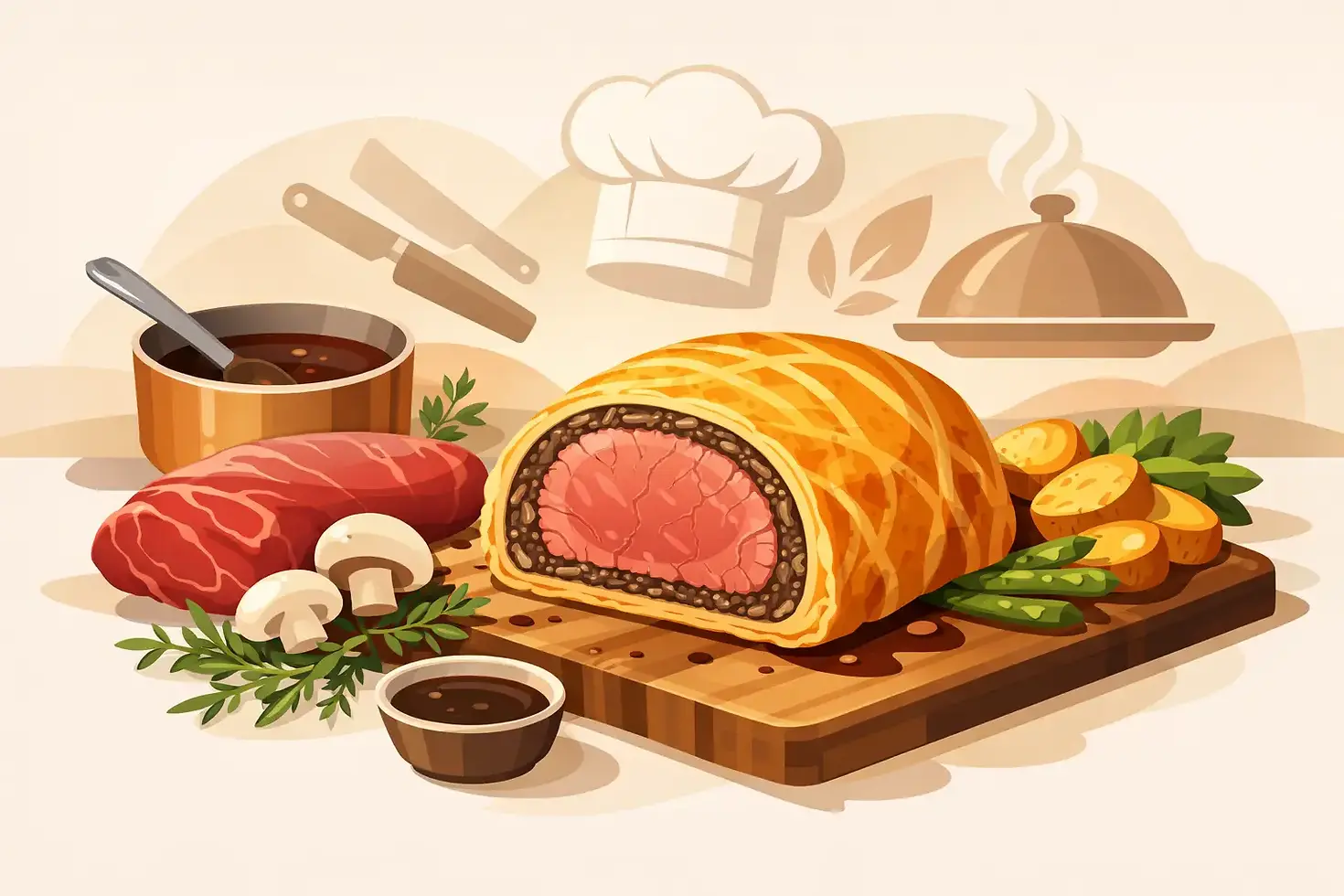
What Makes a Signature Beef Wellington
A great signature beef wellington announces itself the moment it reaches the table. The pastry should be deeply golden, crisp enough to shatter lightly under the knife, and wrapped so precisely that it feels tailored rather than assembled. Then comes the center cut - tender beef cooked to the right temperature, a concentrated mushroom layer, and the subtle richness of prosciutto or another carefully chosen barrier that keeps every texture in balance.
That is the difference between a dish that looks impressive and one that deserves to be remembered. Beef Wellington has always carried a certain sense of occasion, but the versions diners talk about later are not built on spectacle alone. They rely on discipline, restraint, and a clear understanding of where each component should lead and where it should stay in the background.
Why signature beef wellington is so hard to get right
On paper, the dish sounds straightforward. Beef tenderloin is seared, coated, wrapped, chilled, enclosed in pastry, and baked. In practice, each step creates a narrow margin for error. If the beef is not dried and seared properly, the interior can steam instead of roast. If the mushroom duxelles holds too much moisture, the pastry softens. If the assembly is rushed, the layers slide. If the bake is even slightly off, the pastry and beef finish at different moments.
That complexity is exactly why the dish still earns respect in serious kitchens. A signature beef wellington is not difficult because it is fussy. It is difficult because it asks for control over moisture, temperature, timing, and texture all at once.
For diners, that care translates into something very simple: confidence. When a restaurant puts Wellington on the menu, especially as a signature, it is making a statement about technique. It is saying the kitchen is willing to stand behind a classic that leaves nowhere to hide.
The anatomy of a signature beef wellington
The best versions begin with the beef itself. Tenderloin is prized for tenderness, but tenderness alone is not enough. The cut must be properly trimmed so the shape is even, which matters for both presentation and cooking consistency. A ragged piece of beef may still taste good, but it will never bake as evenly or slice as beautifully.
Seasoning matters early, not just at the end. A well-seasoned tenderloin carries flavor through the center rather than depending on sauce to rescue it later. The sear should develop color without pushing the interior too far toward done. That means high heat, quick handling, and enough attention to let the surface brown while the center remains poised for the oven.
Then there is the duxelles, which is often the quiet hero of the dish. Mushrooms are cooked down with aromatics until their moisture is driven off and their flavor becomes dense and almost woodsy. This layer should not read as wet mushroom filling. It should taste refined, concentrated, and integrated. Too coarse, and it interrupts the slice. Too loose, and it weakens the pastry. Too much, and it overpowers the beef.
A thin wrap of prosciutto is common for good reason. It adds seasoning, a little richness, and practical protection between the beef and pastry. Some modern kitchens adjust this layer to suit their style, but the principle remains the same: keep moisture under control while building flavor in quiet increments.
The pastry is where many Wellingtons reveal their weaknesses. Puff pastry should feel delicate, buttery, and crisp, never thick or doughy. It has to protect the filling and deliver that dramatic exterior, but it should never dominate the bite. In a true signature version, the pastry supports the dish with elegance rather than weight.
Technique is what separates classic from ordinary
There is a reason skilled chefs respect this preparation. Signature beef wellington rewards patience more than bravado. Chilling between stages is not optional theater. It helps the layers set, keeps the pastry from warming too soon, and gives the final shape a clean, composed look.
Precision in baking is equally important. The oven must do two things at once: set and brown the pastry while bringing the center of the beef to the intended doneness. That balance is why Wellington can be unforgiving. A kitchen that serves it consistently well is managing heat with real care, not guesswork.
Resting matters too. Cut too soon, and the juices run. Wait too long, and the pastry begins to lose its crispness. The ideal slice arrives in that brief window where the structure holds, the beef is settled, and the outer shell still has lift and crackle.
This is where culinary training shows. Classical technique is not about stiffness or nostalgia. It is about understanding how to make a composed dish feel effortless on the plate. Diners may not name every technical choice, but they recognize the result immediately.
Flavor should feel layered, not heavy
One common misconception is that Beef Wellington is meant to be rich above all else. Richness is certainly part of its appeal, but the best examples avoid heaviness. They move with balance.
The beef should remain the focal point. Earthy mushrooms deepen the flavor without dulling it. Pastry adds texture and butter notes without turning the dish into a blanket of dough. Sauce, when served, should sharpen and complete the plate rather than flood it. A red wine reduction, for example, works best when it brings acidity, depth, and polish.
That balance is especially important for modern diners, who often want indulgence with definition. A signature beef wellington should feel luxurious, but it should also feel precise. You should finish the plate satisfied, not overwhelmed.
Why this dish belongs to special occasions - and still earns repeat visits
Few entrees create a sense of anticipation quite like Wellington. It arrives with presence. It slices beautifully. It invites a pause before the first bite. For anniversaries, birthdays, date nights, and business dinners, it carries the kind of built-in occasion that many dishes simply do not.
At the same time, a restaurant earns loyalty when its signature dish is more than ceremonial. The goal is not just to impress first-time guests. It is to give regulars a reason to come back knowing the experience will be just as polished the second or fifth time. Consistency becomes part of the luxury.
That is especially true in an intimate dining room, where hospitality shapes the meal as much as the plate itself. In the right setting, signature beef wellington feels celebratory without becoming stiff. It can be refined and still warm, classic and still welcoming.
What diners should look for when ordering signature beef wellington
A few details tell you a great deal. First, look at the pastry. It should be evenly browned and crisp, not pale on the underside or soggy where it meets the plate. Then look at the slice. The layers should be distinct and tidy, with the beef cooked to the promised temperature and the filling held neatly around it.
Pay attention to proportion. Too much pastry suggests compensation. Too much mushroom filling can bury the meat. Too much sauce can signal that the plate needs help. In a well-executed Wellington, nothing is there to distract. Each element earns its space.
And finally, notice how it feels to eat. A strong version has contrast from the first bite to the last - crisp pastry, tender beef, savory depth, and enough brightness from seasoning or sauce to keep the palate engaged. That contrast is what makes the dish memorable rather than merely luxurious.
At Le Bistro, that philosophy is central to the plate. A signature dish should reflect training, sourcing, and care, but it should also make guests feel entirely at ease the moment it arrives.
Signature beef wellington and the value of craftsmanship
There are easier ways to build a menu. There are safer dishes, faster dishes, and dishes with wider margins for error. Wellington remains compelling because it resists shortcuts. It asks the kitchen to commit to craft in a way guests can actually taste.
That is why it continues to hold such a special place in French-inspired dining. Not because it is old-fashioned, and not because it is theatrical, but because when it is done properly, it delivers something rare: comfort, precision, and celebration in the same dish.
If you are choosing the kind of meal that should feel worthy of the evening around it, this is still one of the clearest answers on any menu.


Comments